
OUR HISTORY
The Braumart Theater opened in Downtown Iron Mountain in April, 1925. The Braumart name is a composite of the theater’s owners: August Brauns and Martin Thomas. Brauns and Thomas were key figures in Dickinson County’s public entertainment market.
The Braumart was designed from the start to show movies, serving the community as a state of the art venue from the silent era through the golden age of Hollywood. Due in part to the advent of Television in the 1950s, a change in moviegoing habits led to the eventual closing of other theaters, leaving the Braumart as Iron Mountain’s only cinema for the next 40 years. In 1982, the Theater’s auditorium was divided in half to better cater to general and adult audiences. The Braumart continued to screen new and second-run films for a brief period before officially closing the chapter on its first era in January of 1996.
In the late 1990’s, the Braumart was remodeled into a performing arts facility, and has become a unique destination for live music in the region. A new era for The Braumart began in 2007, when the Friends of the Braumart organized in 2007 as a theater redevelopment organization aimed at breathing new life into the historic space. In 2013, the Milwaukee architectural firm of Engberg Anderson conducted an architectural, engineering and structural analysis that concluded the building was sound, and laid out a plan to reconceive the Braumart as a multi-use performing arts center. On February 11th, 2016, the Friends of the Braumart purchased the historic building, reaching the first major milestone in their goal to purchase and manage the Braumart Theater for the next generation.
Since 2016, the Braumart has played host to a wide variety of national and local musicians, dance and theatrical performances, and classic movies. In this time, it has also become the unofficial home for the creative arts and live entertainment in Dickinson County. As of 2025, the theater board of directors have outlined a step by step plan to completely renovate the building in 3 phases. With a new era for this historic downtown treasure just on the horizon, the time has never been better for you to become a part of The Braumart’s next 100 years.
HISTORIC PHOTOS OF THE BRAUMART
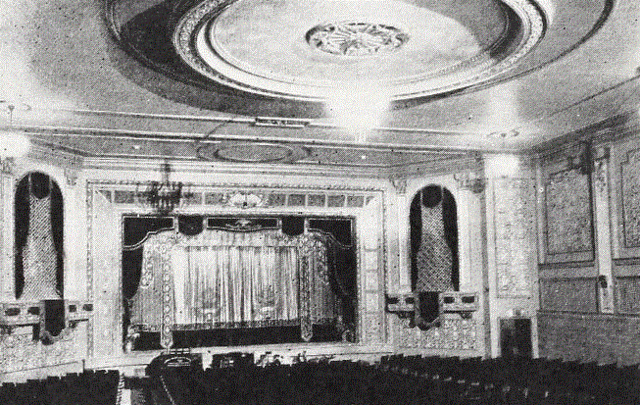
The Braumart Theater, Iron Mountain, 1920S: The oldest found photo of The Braumart’s interior.
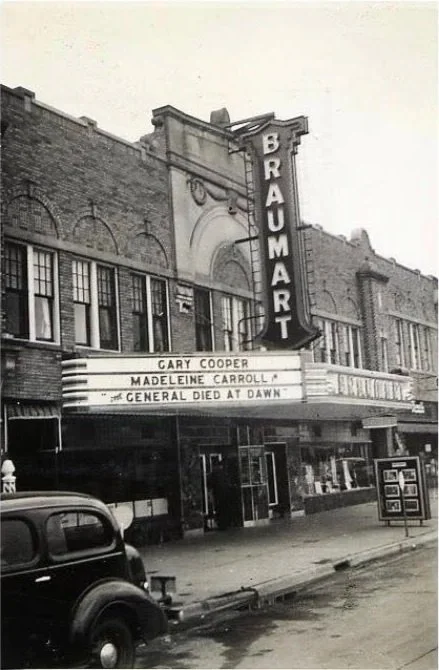
The Braumart Theater, Iron Mountain, 1936:
On February 18, 1924, Martin D. Thomas, manager of the Colonial Theatre Company, announced a new theater would be built here, added to the Colonial and the Bijou. The name Braumart was a combination of the names of the owner, August E. Brauns, and the manager, Martin D. Thomas. Final plans were for a building with a total area of 96 x 120 feet, including the foyer, 25 x 30 feet; the auditorium, 73 x 90 feet; a shop 25 x 40 feet on each side, and another store 26 x 120 feet.
The estimated cost, including equipment, was $200,000. The architects were Herbst & Kuenzli, of Milwaukee. The Foster Construction Company, also from Milwaukee, began construction in September 3, 1924. The grand opening was held Tuesday, April 21, 1925. Two performances filled the 1,000-seat theater and patrons were turned away. Ambrose Larson, a nationally-noted organist, played the Wurlitzer-Hope-Jones organ. “The General Died at Dawn” came out in 1936, starring Gary Cooper and Madeleine Carroll.
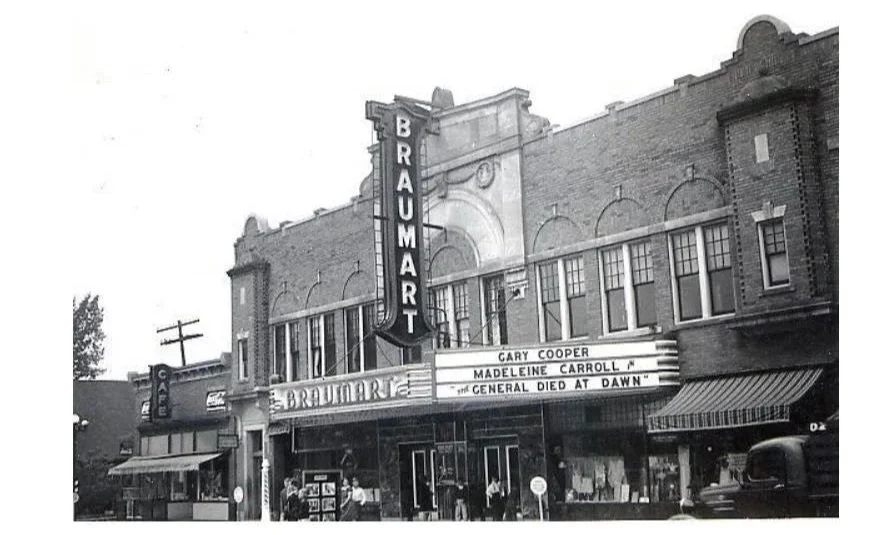
The Braumart Theater, Iron Mountain, 1936:
Inset at several places in the wall dividing the foyer from the auditorium were groups of three arched windows fitted with stained glass that reflected in various tints the soft glow of the indirect lighting system. Entry to the auditorium was through French doors from the arc-shaped, long foyer. The auditorium had seating capacity for 1,000 patrons with four heavily-carpeted aisles to provide easy access to the deeply-cushioned seats.
The auditorium walls were decorated in various tints and shades, providing a “tapestry effect” in the panels. Pilasters along the walls were highly decorated, each bearing the famed theatrical masks of comedy and drama. The proscenium arch opened upon the 15 x 40-foot stage.
Two large grills, one on each side of the stage and about ten feet above the floor, were located on the two walls that slanted inward to the proscenium arch, concealing the large chambers in which the organ equipment was installed. The Wurlitzer-Hope-Jones organ, “the largest and most completely equipped in the upper peninsula and northern Wisconsin,” included hundreds of pipes and a variety of orchestra instruments, all electrically controlled from a keyboard in the orchestra pit.
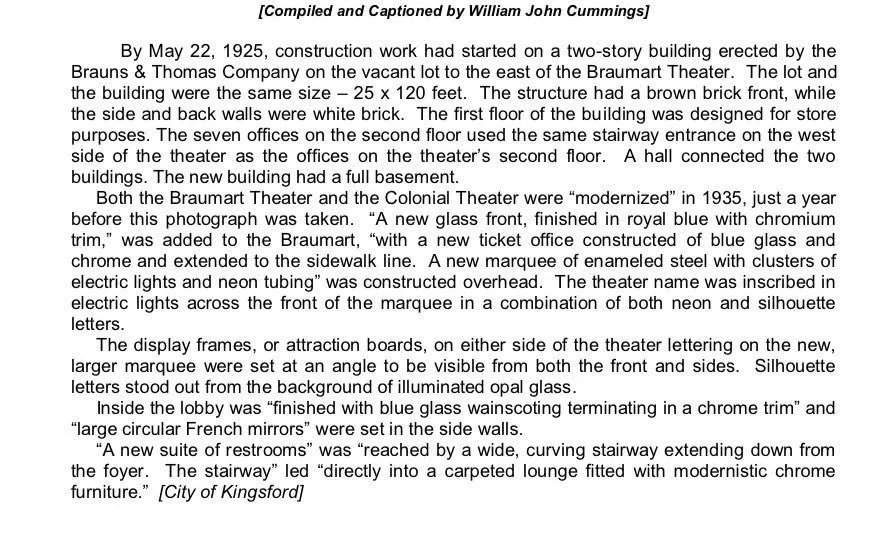
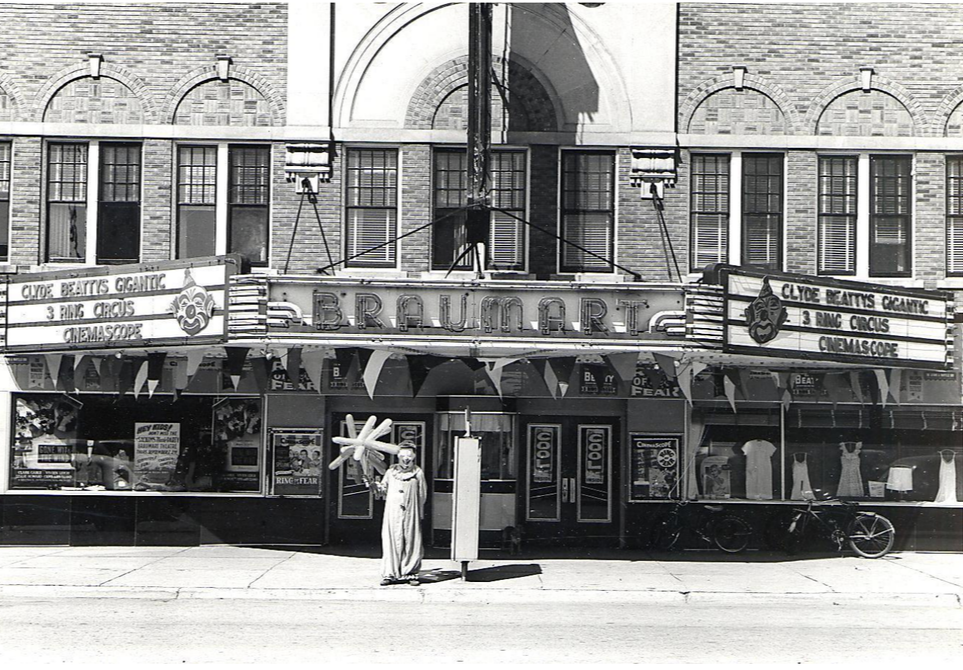
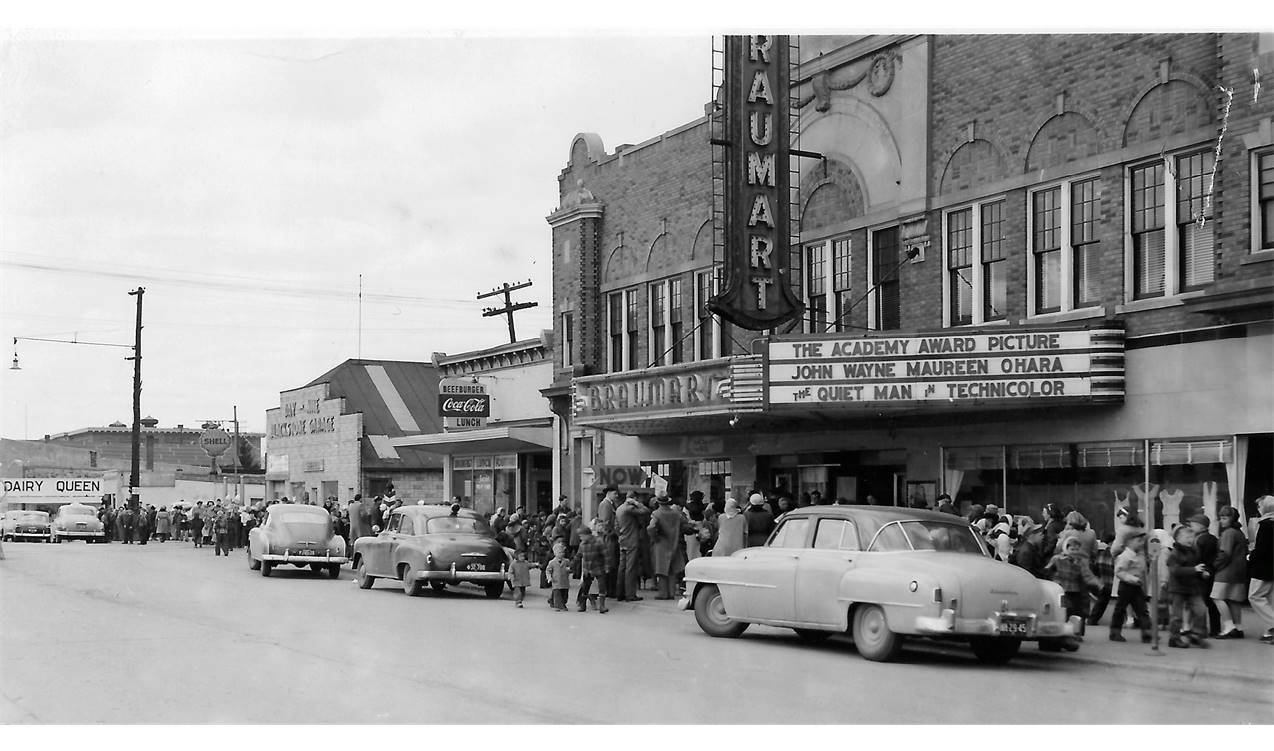
The Braumart Theater, Iron Mountain, 1954: A clown stood in front of the Braumart Theater advertising the movie “3 Ring Circus” in 1954. Notice the ticket booth located between the two sets of double doors.
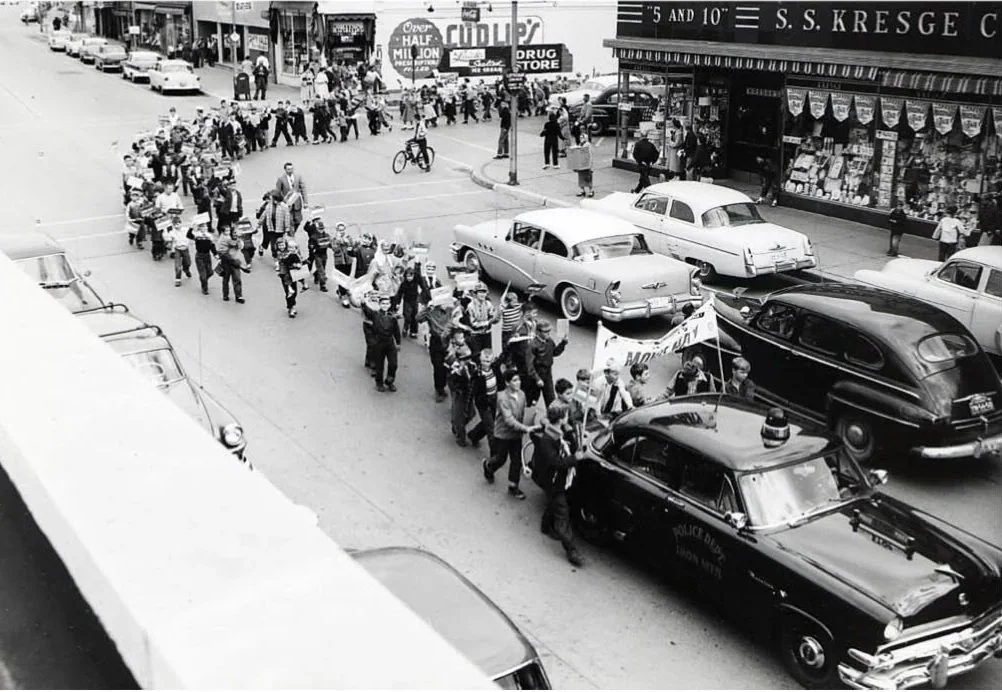
Iron Mountain, ca. 1950-1955: The parade for Movie Day, sponsored by the Braumart Theatre in the early 1950’s led by the Iron Mountain Police Department.
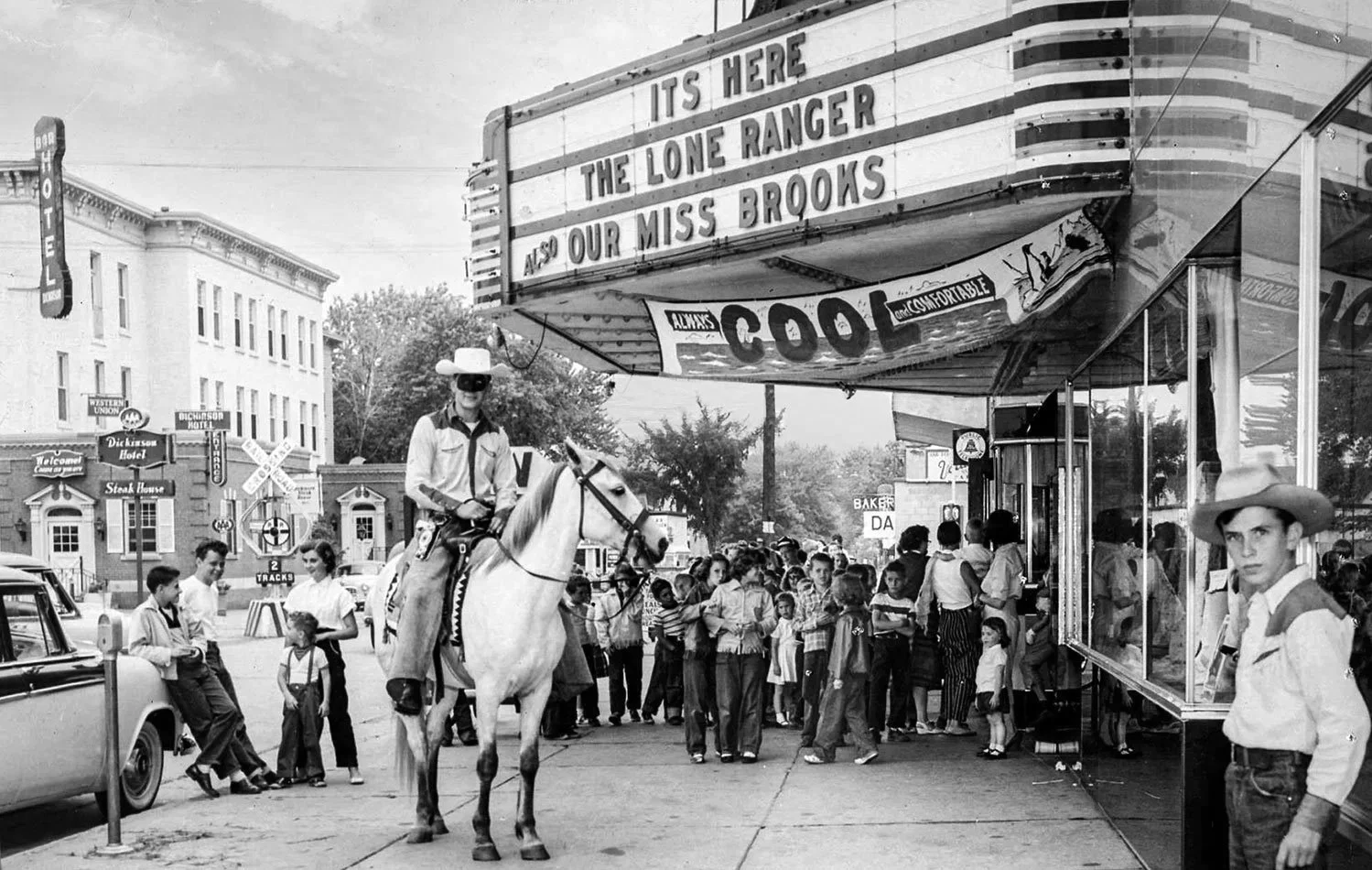
The Braumart Theater, Iron Mountain, 1956: “The Lone Ranger” (Mike Klobucher) appeared in front of the Bramart Theater in 1954 to promote the movie of the same name. “Our Miss Brooks” was also playing.
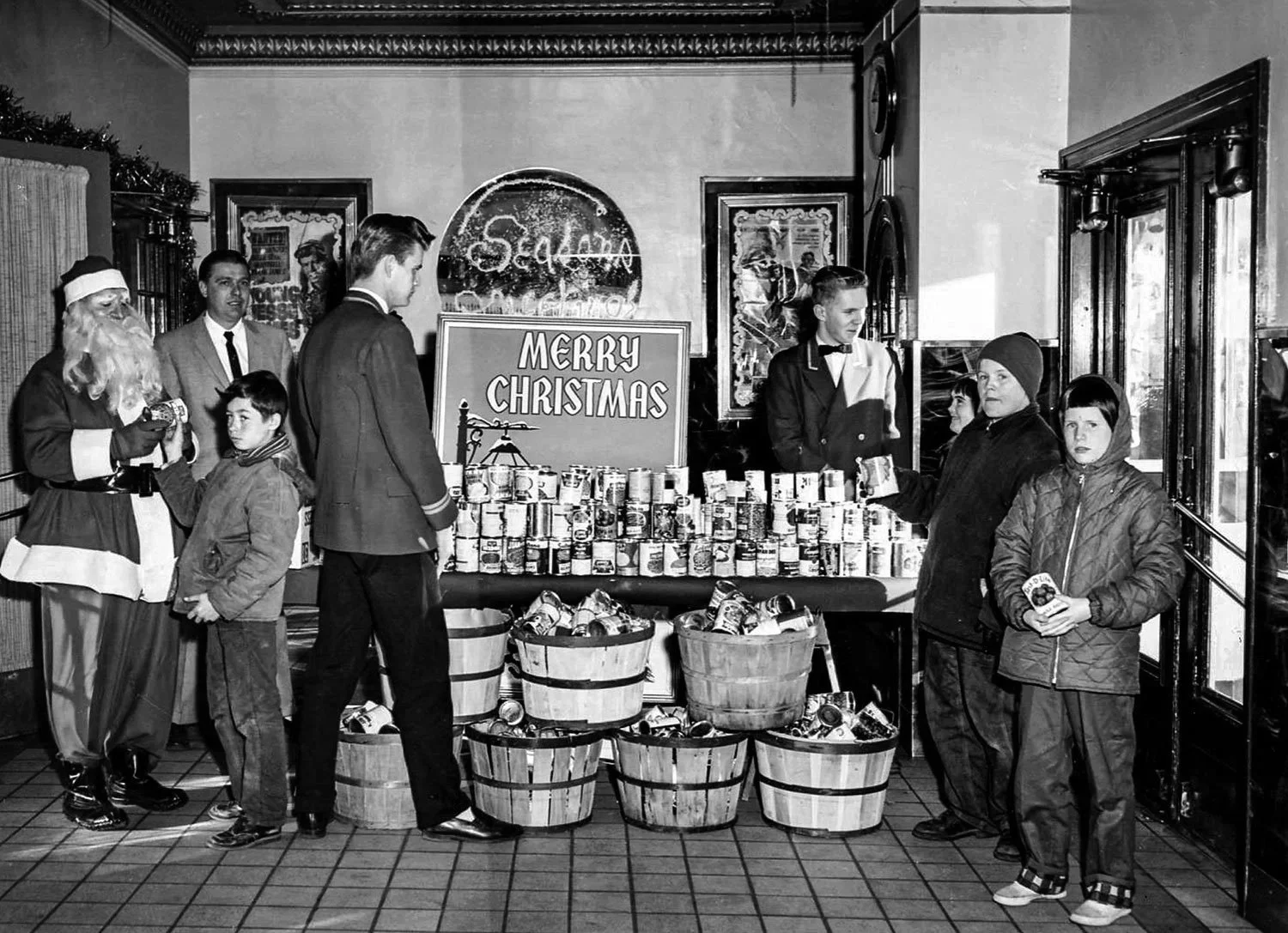
The Braumart Theater, Iron Mountain, late 1950’s: Patrons stacked canned goods in bushel baskets and on a table in the lobby to gain admittance to the Braumart Theater prior to the Christmas holidays to help the less fortunate. Santa Claus and two uniformed ushers helped, and Frank Osteroth, theater manager, stood in the back at the left.
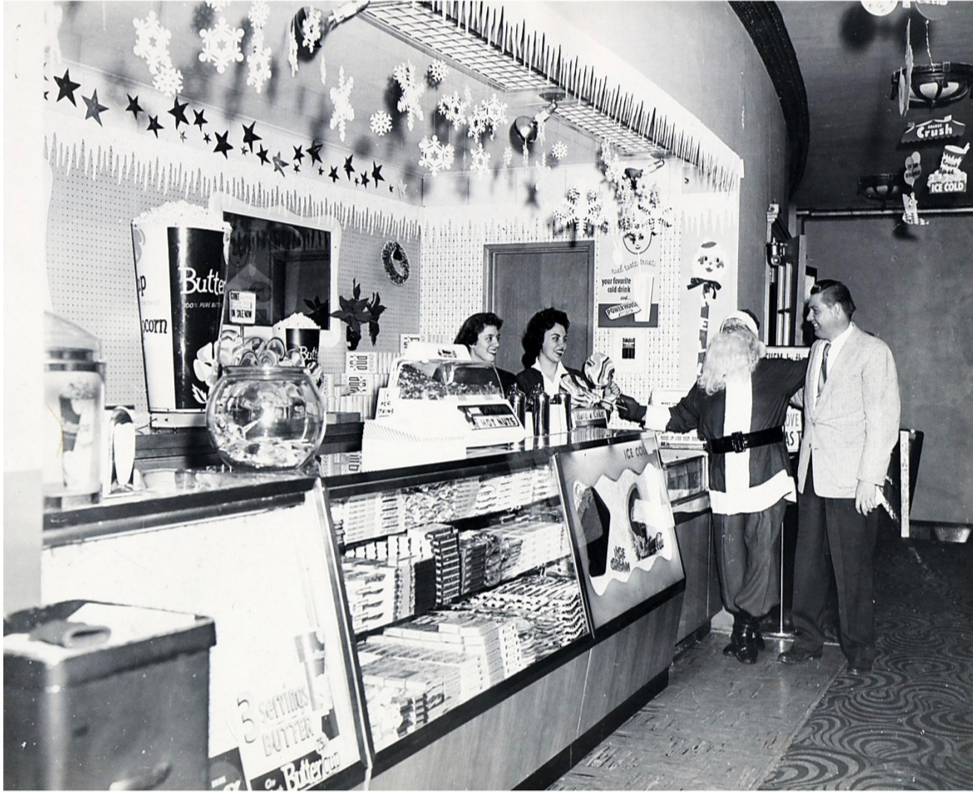
The Braumart Theater, Iron Mountain, late 1950’s: Icicles and snowflakes adorned the concession at the Braumart Theater prior to the Christmas holidays in the late 1950’s. Santa Claus and Frank Osteroth, theater manager, were being helped by the clerks.

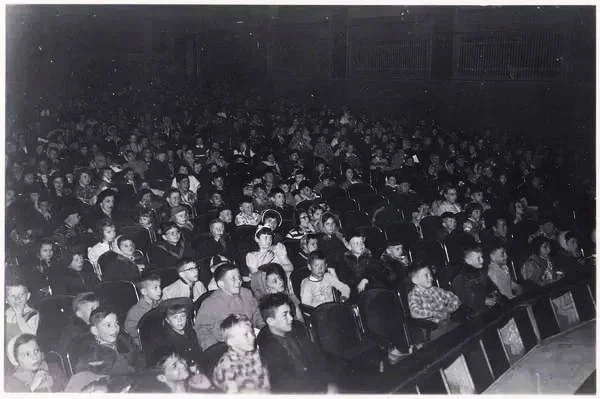
The Braumart Theater, Iron Mountain, late 1950’s: The banner held by a uniformed usher and Frank Osteroth, theater manager, at the Braumart Theater in the late 1950’s noted the Penny’s Movie Party. Judging from the young audience, the matinee may have been sponsored with free admission. Note the architectural appointments of the theater’s auditorium, including the set of three arched windows at either side of the back wall.
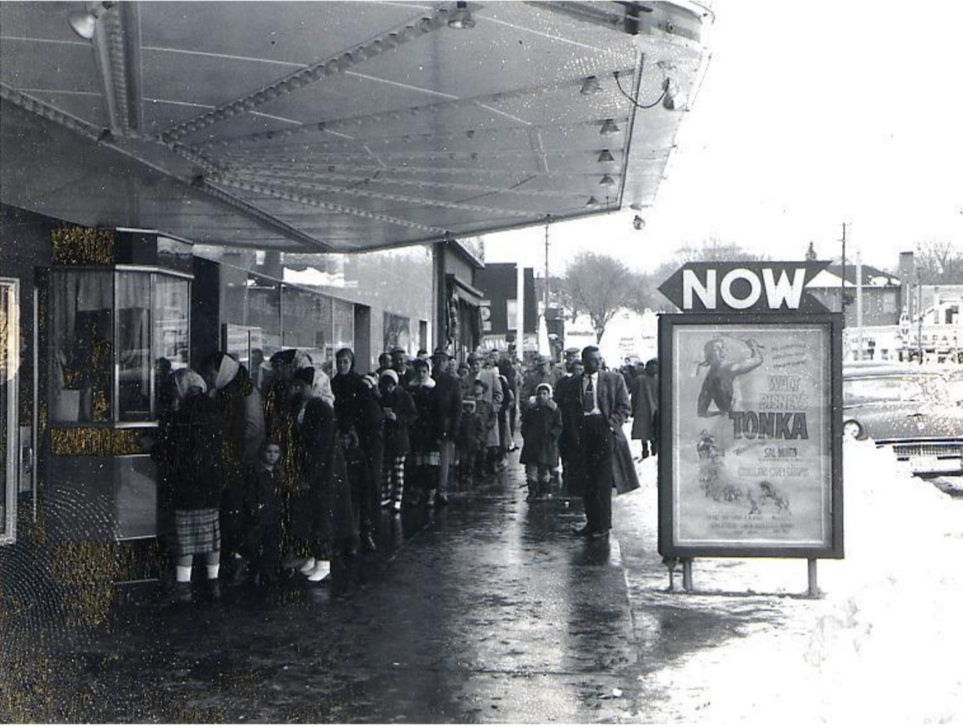
The Braumart Theater, Iron Mountain, 1958: Crowds lined up to see Walt Disney’s movie “Tonka” on a winter day in 1958 in front of the Braumart Theater. Note the light bulbs under the marquee and the street sign with the movie playbill.
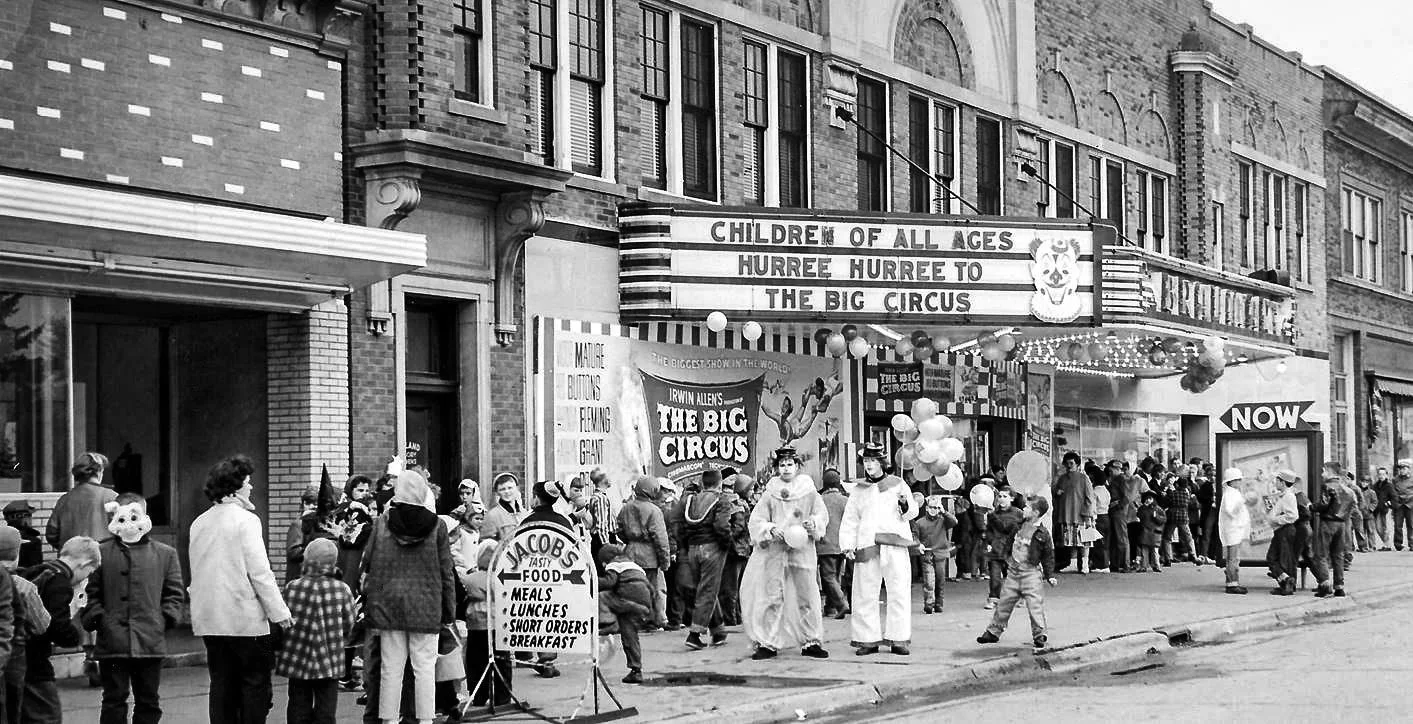
The Braumart Theater, Iron Mountain, 1959: Clowns promoted “The Big Circus,” playing at the Braumart Theater in 1959.
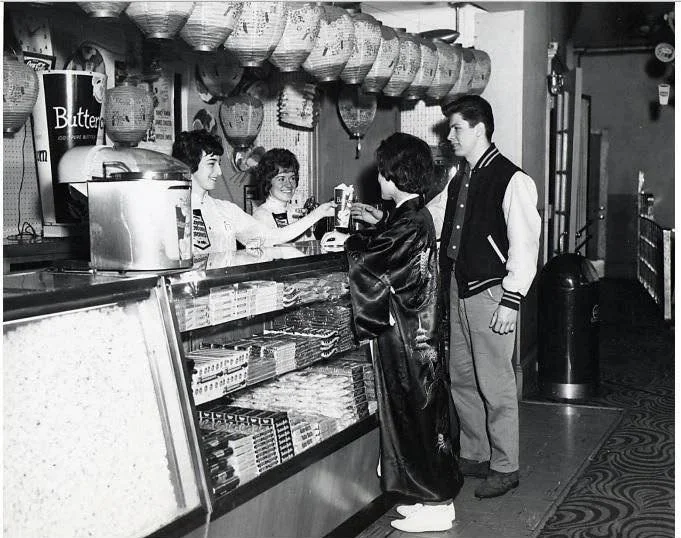
Iron Mountain, 1961: Chinese lanterns adorned the concession stand in 1961 when “Flower Drum Song” was featured at the Braumart Theater.
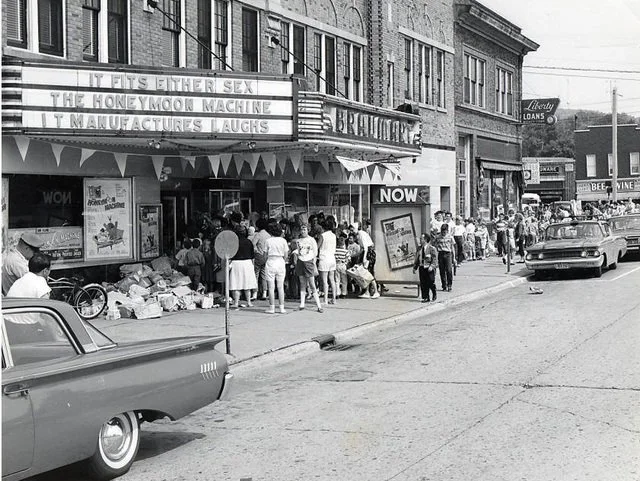
The Braumart Theater, Iron Mountain, 1961: Donations of food were accepted for admission to “The Honeymoon Machine” in 1961 at the Braumart Theater. Note the long lines extending east to the end of the block.

The Braumart Theater, Iron Mountain, 1962: Five young Braumart employees posed in front of the windows dressed in western gear to promote the 1962 movie “How the West Was Won.”
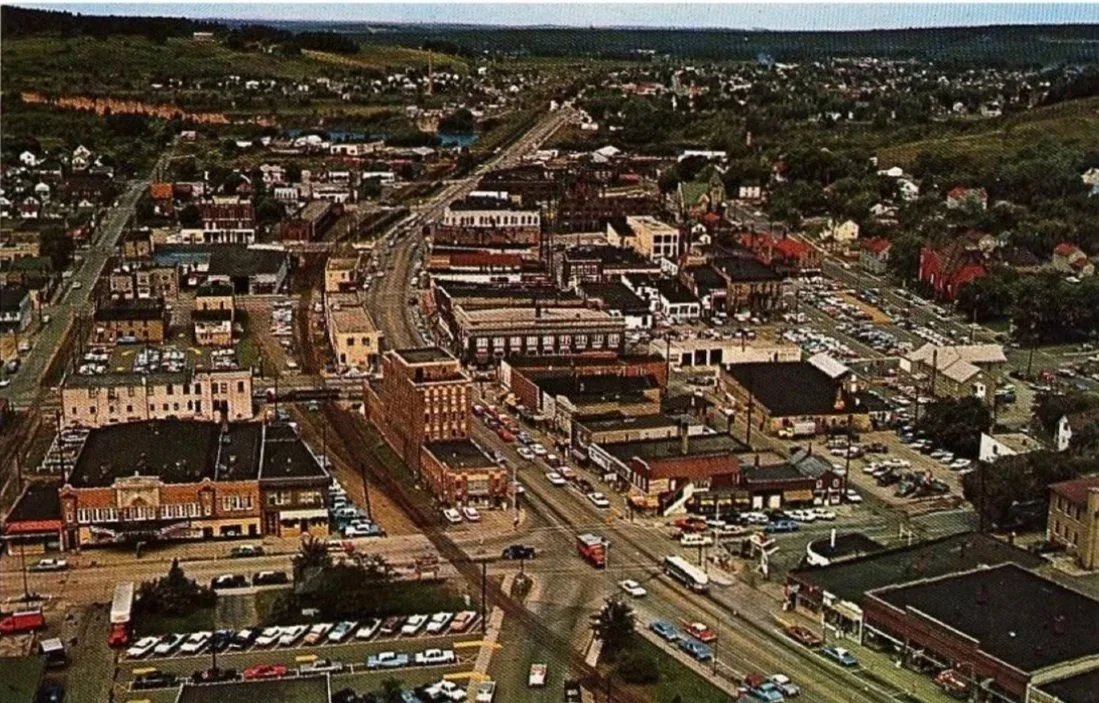
Aerial View of Iron Mountain’s Business District, 1963: This postcard aerial view of the downtown business district looking northeast, copyright 1963. The Braumart Theatre is located on the lower left.
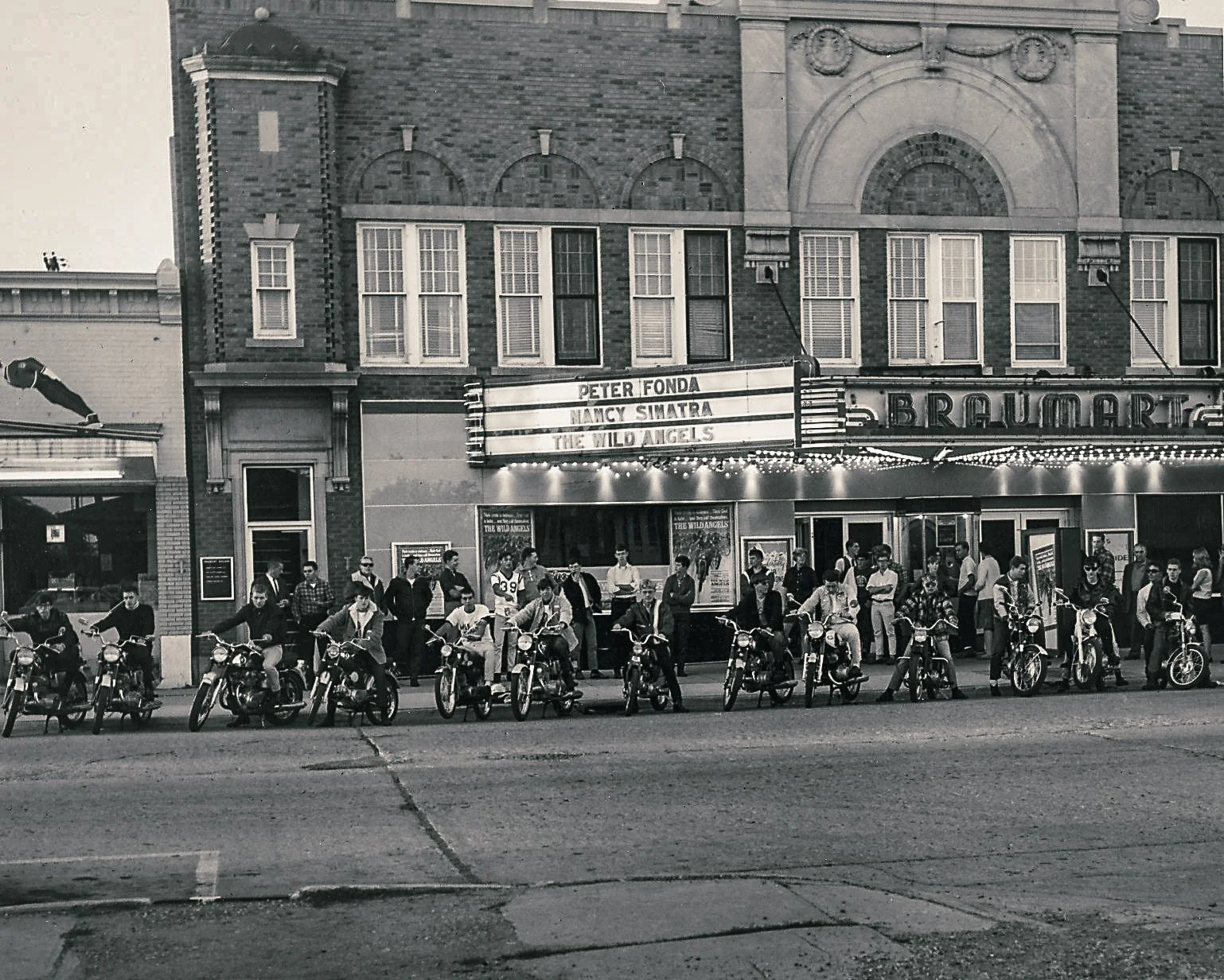
The Braumart Theater, Iron Mountain, 1966: Motorcycles appeared en force to promote “The Wild Angels,” playing at the Braumart Theater in 1966. Peter Fonda and Nancy Sinatra starred in this movie.

The Braumart Theater, Iron Mountain, 1966: Teenage boys and their motorcycles promoting “The Wild Angels at the Braumart Theater. The marquee lights highlight the entrance.
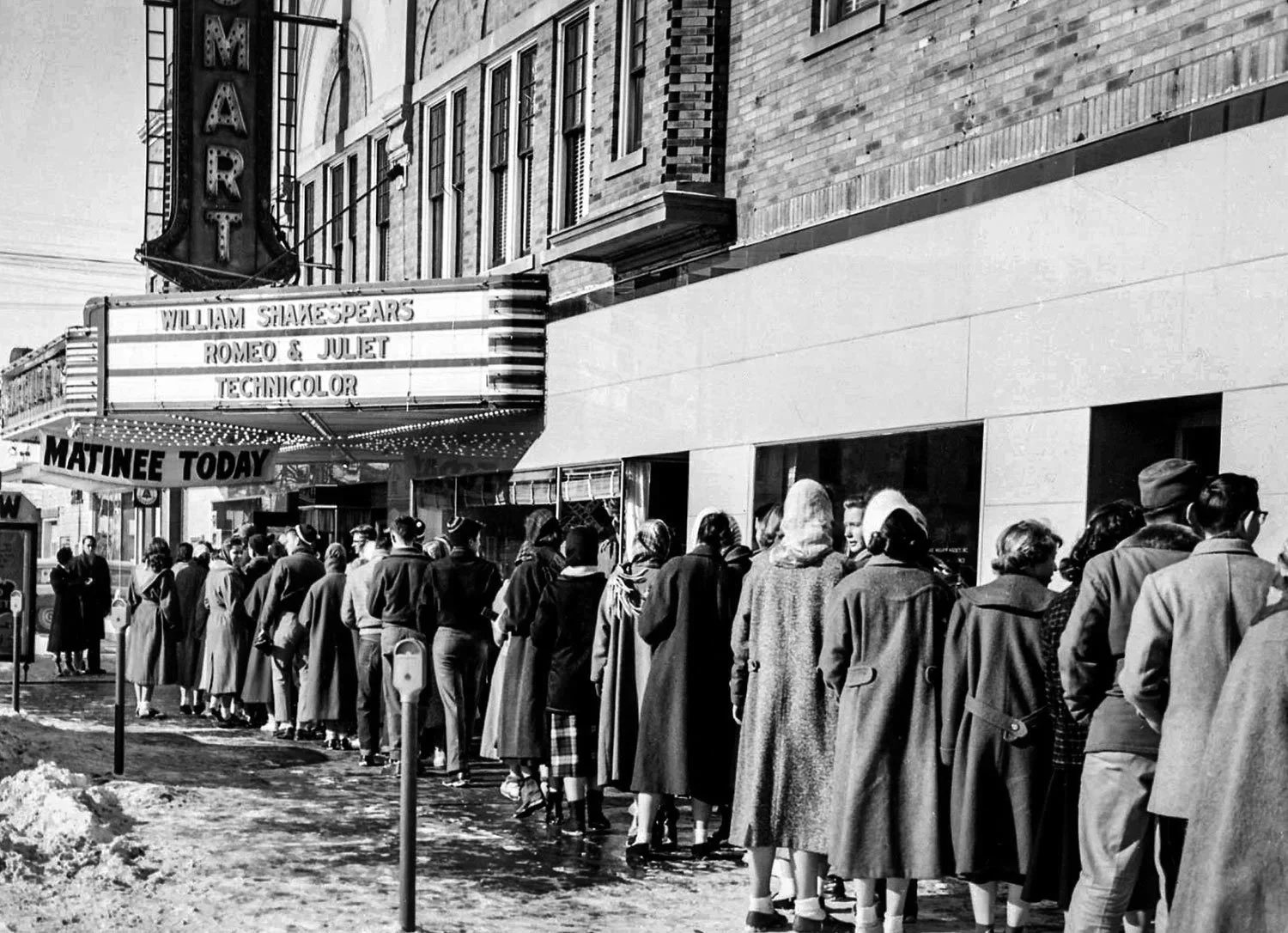
The Braumart Theater, Iron Mountain, 1968: Braumart Theater patrons braved the cold to get their tickets for Romeo & Juliet, a much-acclaimed movie, in 1968.
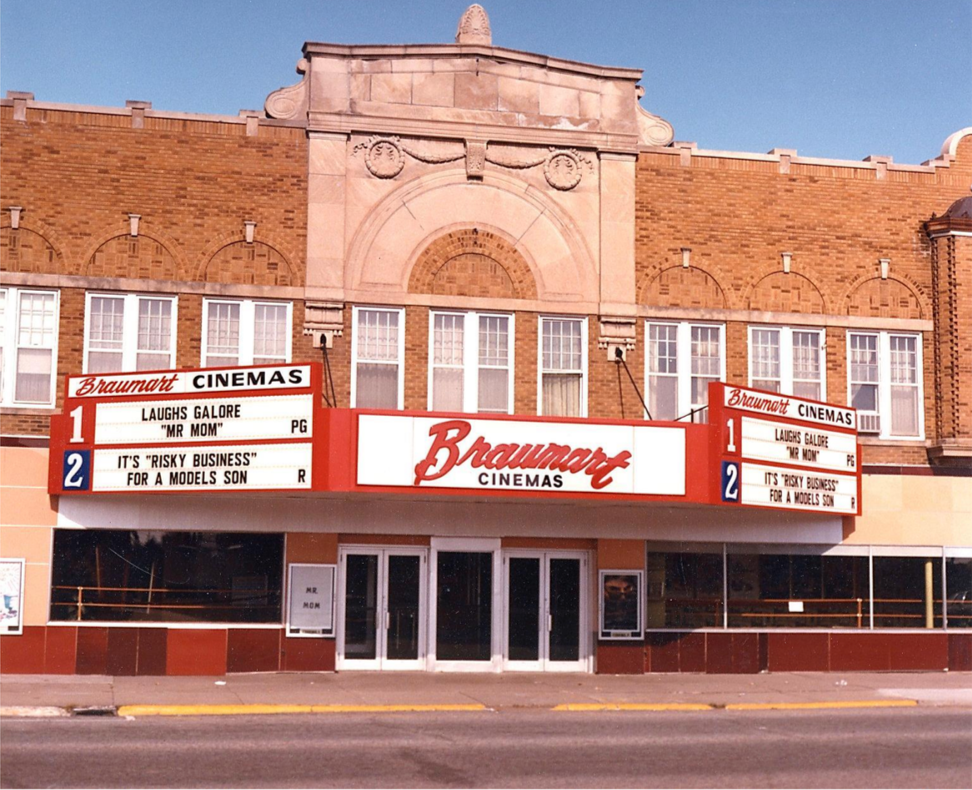
The Braumart Cinemas, Iron Mountain, 1983: The Braumart Theater’s auditorium was divided into two parts in 1982. Note that the ticket booth was no longer between the two sets of double doors, and the red “Braumart” had replaced the lighted version. In 1983 “Mr. Mom” and “Risky Business” were playing. In April, 1995, a new eightscreen cinema opened on U.S. 2 in Quinnesec. The Braumart showed second-run films for a while and again showed some new releases before closing in January, 1996.
The Braumart Cinemas, Iron Mountain, 1996:
The Braumart Theater officially concluded its first era of operation.
Competition: The closing followed the April 1995 opening of the 8-screen Tri-City Cinema, which drew business away from the downtown location.
Legacy: Known for its "Kiddie Matinees" on Saturday afternoons, the theater served as a major community hub for over 70 years prior to its closure.
Friends of The Braumart Established 2007:
Ownership: The group officially purchased the theater on February 11, 2016.
2013 Structural Analysis: The group commissioned an architectural study that confirmed the building's integrity and established a long-term plan for its use as a performing arts center.
Ongoing Mission: As of 2026, the organization continues to raise funds for extensive restoration to ensure the 100-year-old building remains a cultural landmark.
Support & Management: The organization is managed by a board of directors and is supported by donors, volunteers, and grants.
Renovation Plans: The board is currently working on a three-phase renovation plan.
OUR SUPPORTERS